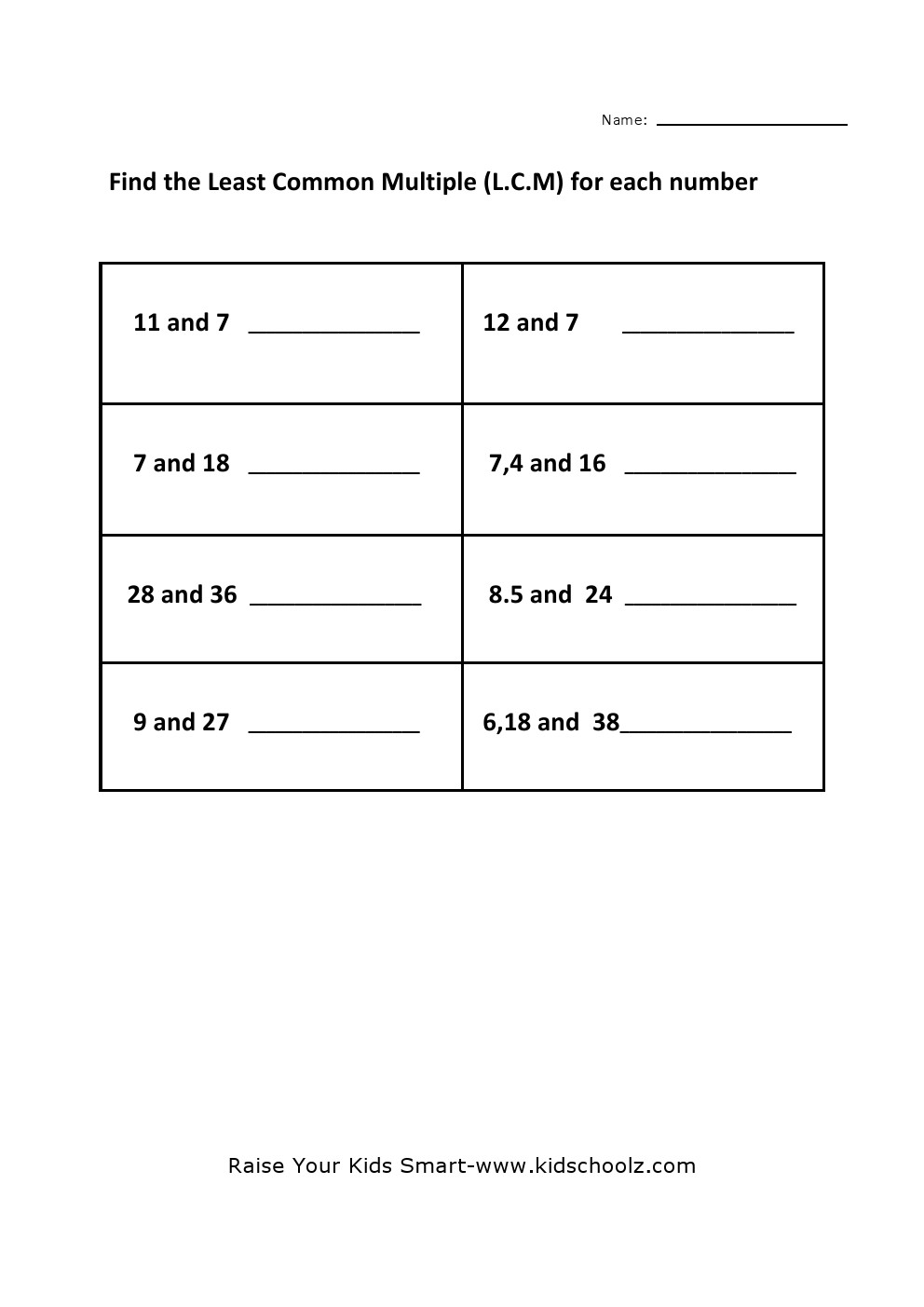
Finding the least common multiple (LCM) can be a handy skill, especially when dealing with fractions or finding common denominators. Understanding how to calculate the LCM for different numbers simplifies many math problems.
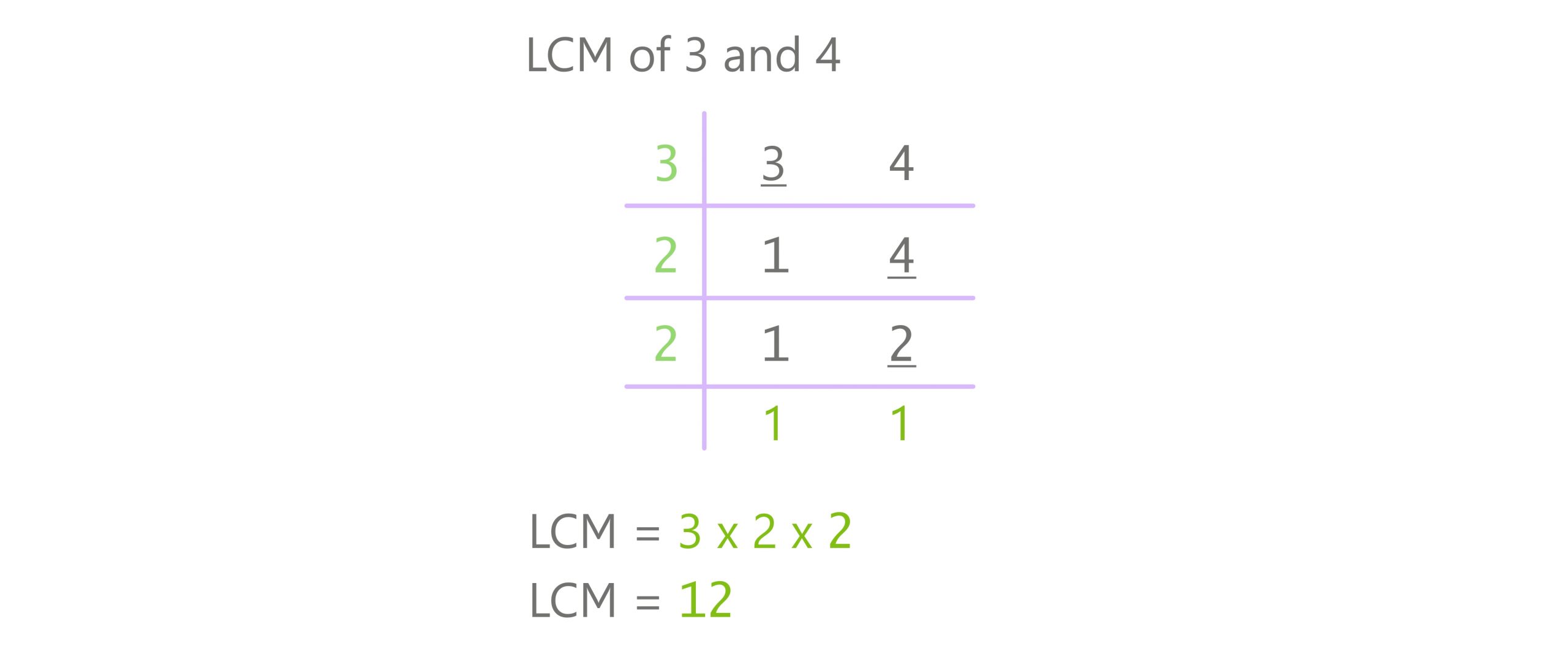
lcm for 3 and 4
LCM for 3 and 4
The LCM of two numbers is the smallest multiple that they both share. For 3 and 4, we can find this by listing their multiples. The multiples of 3 are 3, 6, 9, 12, and so on. The multiples of 4 are 4, 8, 12, and so forth.
By comparing these lists, we see that the smallest common multiple is 12. Therefore, the LCM for 3 and 4 is 12. This means that both numbers can divide into 12 without leaving a remainder.
Another method to find the LCM is using prime factorization. For 3, the prime factor is just 3 itself. For 4, it breaks down into 2 x 2. Taking the highest powers of each prime gives us: 2² x 3 = 12.
Understanding how to calculate the LCM for numbers like 3 and 4 not only enhances your math skills but also boosts your confidence in handling more complex problems in the future.
Mastering the concept of LCM opens doors to solving various mathematical challenges. With practice, finding the least common multiple will become second nature, making math more enjoyable and less daunting.